AI transforms lead nurturing by analyzing behavior and delivering personalized content in real time. Unlike static email sequences, AI adjusts messaging based on actions like visiting pricing pages or downloading resources. This approach saves time, improves engagement, and generates more qualified leads.
Key takeaways:
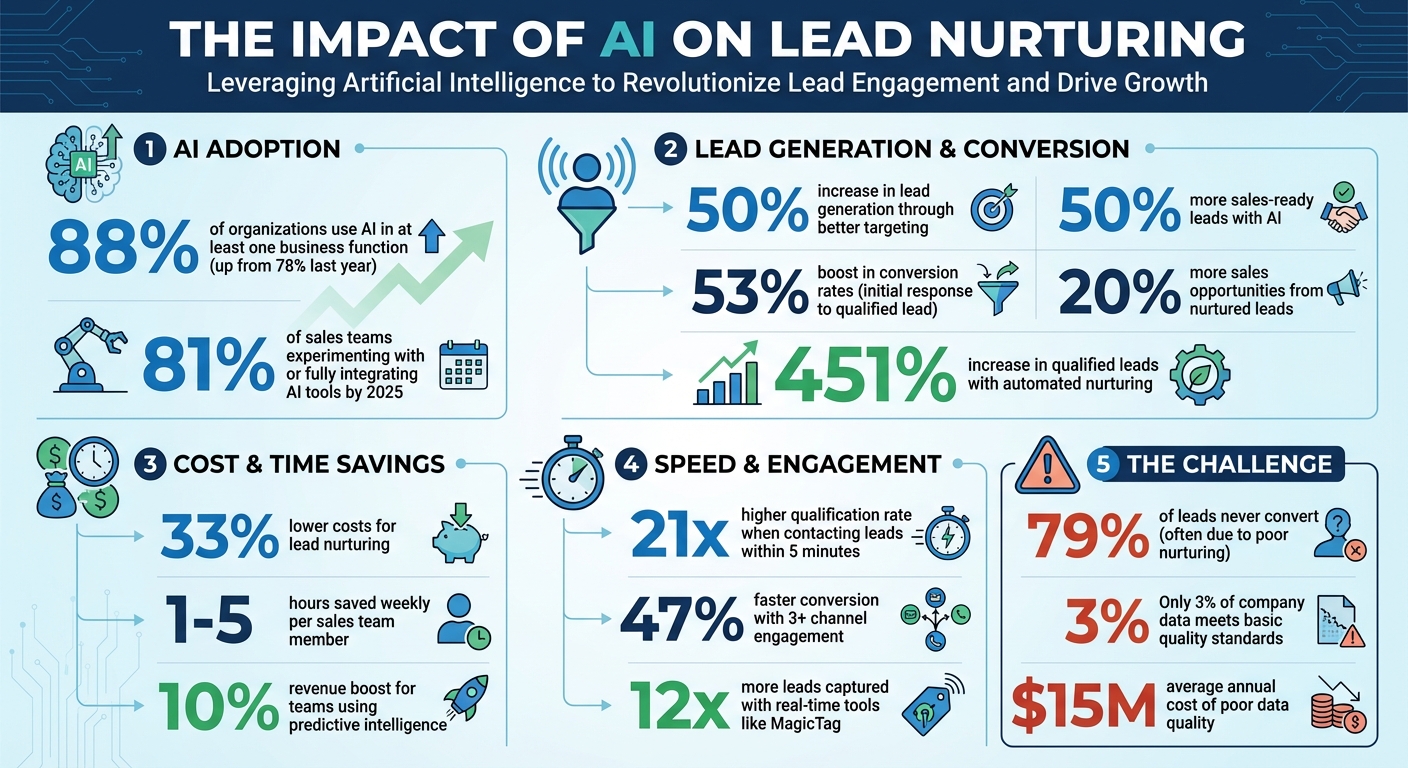
- 88% of organizations now use AI in at least one business function (up from 78% last year).
- Companies using AI for lead nurturing see 50% more sales-ready leads at 33% lower costs.
- Sales teams save 1-5 hours weekly by automating lead scoring, data entry, and follow-ups.
Steps to get started:
- Set clear goals and define measurable KPIs like email engagement or demo requests.
- Clean your data to avoid errors - standardize formats and remove duplicates.
- Use AI for predictive lead scoring, dynamic segmentation, and real-time workflows.
- Align lead stages with specific objectives, such as educating new leads or converting high-intent prospects.
- Implement tools like MagicTag to recover abandoned leads and speed up responses.
AI-driven systems can boost lead generation by up to 50% and improve conversion rates by 53%. By combining AI automation with human oversight, businesses can scale personalized lead nurturing while focusing on high-priority prospects.
AI Lead Nurturing Statistics: Impact on Sales, Costs, and Conversion Rates
How to Automate Lead Nurturing with AI Agents in Salesforce
Set Goals and Build Your Data Foundation
To let AI truly enhance your lead nurturing, two things are non-negotiable: clear goals and clean data. Without measurable objectives, you can't evaluate AI's performance or justify your spending. And without standardized, accurate data, AI risks triggering irrelevant actions, sending the wrong messages, and tarnishing your brand.
Consider this: 79% of leads never convert into sales, largely because companies fail to nurture them effectively. On top of that, only 3% of company data meets basic quality standards, and 47% of newly created records contain critical errors. Poor data quality isn't just a tech hiccup - it’s a financial sinkhole, costing businesses an average of $15 million annually.
Define Measurable KPIs
Start by pinpointing the key milestones that drive revenue in your business. These could include actions like pricing page visits, webinar signups, case study downloads, or demo requests. Tie specific KPIs to each stage of your buyer's journey to measure progress effectively.
For new leads in the awareness phase, track metrics like email opens, content engagement, and resource downloads. Mid-funnel prospects in the consideration phase should be evaluated based on case study views, webinar attendance, and qualification scores. For decision-stage leads, focus on metrics like meeting bookings, conversion rates, and time-to-close.
AI shifts the focus of your metrics in significant ways. Instead of tracking cost per lead, shift to cost per qualified opportunity. Replace simple email open rates with engagement progression scores, which assess relationship-building over time. Swap click-through rates for intent advancement tracking, which captures genuine buying signals.
"The KPIs you track should relate to your buyer journey. If you're looking at fresh leads, don't measure them based on whether they're booking sales meetings... Instead, focus on whether they're opening emails or reading content."
- Salesforce
Nurtured leads generate 20% more sales opportunities than their non-nurtured counterparts. AI can further boost lead volume by up to 50% through better targeting. But these benefits are only achievable if you first establish the right KPIs. Set a clear lead score or behavior-based signal that prompts an automatic sales handoff - this becomes the crucial bridge between marketing and revenue.
Clean and Standardize Your Data
Data quality is the backbone of any AI-driven strategy. Start by eliminating duplicates using fuzzy matching to catch variations (e.g., "IBM" vs. "International Business Machines"). Then, ensure consistent formatting across all CRM fields.
For example:
- Phone numbers: Use the international E.164 format (+1 123-456-7890).
- Dates: Stick to ISO 8601 format (YYYY-MM-DD, e.g., 2025-12-20).
- Company names: Choose one version and stay consistent (e.g., "USA" or "United States", but not both).
To prevent inconsistencies, enforce standardized entries in your CRM through mandatory fields and drop-down menus (e.g., "CA" vs. "California"). Real-time validations for email deliverability, phone formats, and addresses can stop bad data from contaminating your AI models from the outset.
"Following an 80/20 approach often makes more sense - achieving substantial model value with minimal cleaning investment rather than pursuing perfection at exponential cost."
- Kjell Carlsson, Domino Data Lab
While it's essential to fix systemic errors like inconsistent date formats or missing job titles, avoid over-cleaning. Natural data variations can actually enhance AI model accuracy.
Remember, over 30% of B2B contact data becomes outdated annually. Set up continuous updates to refresh lead records as changes occur - like job moves or funding rounds. Speed is critical; the success rate of contacting a lead plummets more than tenfold within the first hour after they express interest.
With clean, validated data in place, you’re ready to align lead stages with targeted nurturing goals.
Map Lead Stages to Nurturing Objectives
Once your KPIs are defined and your data is standardized, the next step is to align each lead stage with specific objectives that AI can optimize. This mapping ensures AI delivers the right content at the right time and triggers sales handoffs when needed.
- Awareness Stage: Focus on education and engagement. Share value-packed emails, blog posts, and whitepapers. Track metrics like open rates, content reads, and click-throughs.
- Consideration Stage: Build trust using case studies, webinars, and comparison guides. Measure webinar registrations and resource downloads.
- Decision Stage: Push for conversion with social proof, direct meeting links, and FAQs. Monitor sales meetings booked and conversion rates.
| Nurture Stage | Objective | Recommended Content | Key KPIs |
|---|---|---|---|
| Awareness | Education & Engagement | Value emails, blog posts, whitepapers | Open rates, content reads, click-throughs |
| Consideration | Building Trust & Proof | Case studies, webinars, comparison guides | Webinar registrations, resource downloads |
| Decision | Conversion & Handoff | Social proof, meeting links, FAQs | Sales meetings booked, conversion rate |
To keep your lead scoring model relevant, implement decay logic. For example, a website visit from nine months ago shouldn't carry the same weight as one from today. Gradually reduce lead scores for inactivity, allowing your sales team to focus on the most engaged prospects.
Real-world results show the power of AI-driven workflows. In 2024, ServiceBell used the AI tool Clay to automate lead identification and research, booking 10 meetings in a single day and achieving 30 meetings with just one hour of manual work. Similarly, Qrew, a recruiting company, slashed manual research hours by 50%, doubled their meeting bookings, and increased reply rates by 100% using similar AI tools.
For this system to work seamlessly, your CRM must sync in real-time with your nurturing tools. This integration ensures that both sales and marketing teams have access to the same up-to-date data. With this foundation, you’ll be ready to dive into real-time lead scoring and workflow automation in the next steps.
Apply AI for Lead Scoring, Segmentation, and Real-Time Data
Once your foundation is solid, it's time to let AI do the heavy lifting. Traditional lead scoring often relied on fixed points (e.g., assigning 10 points for downloading a whitepaper or 5 points for opening an email). But today, AI digs deeper, analyzing historical patterns from successful deals to predict which leads are most likely to convert. The results? Sales teams using predictive intelligence are 2.8 times more likely to focus on the right leads, leading to a revenue boost of over 10%.
Score Leads with AI and Set Handoff Thresholds
AI takes lead evaluation to another level by assessing two key factors: fit (e.g., company size, revenue) and intent (e.g., pricing page visits, spec sheet downloads). Based on this, it determines the best next step.
| Quadrant | Characteristics | Action |
|---|---|---|
| Quadrant A | High Fit, High Intent | Immediate sales handoff; personalized proposal |
| Quadrant B | High Fit, Low Intent | Automated nurture; guide toward purchase |
| Quadrant C | Low Fit, High Intent | Self-serve paths; interactive demos |
| Quadrant D | Low Fit, Low Intent | Minimal automated filtering or disregard |
AI models also account for negative scoring, flagging actions like unsubscribes, competitor activity, or other signs of disinterest.
To determine when to pass leads from marketing to sales, analyze historical data to identify key touchpoints - such as reading case studies, attending webinars, or visiting pricing pages - that frequently lead to conversions. Assign a score threshold that automatically upgrades a lead from MQL to SQL, triggering CRM alerts or SDR (Sales Development Representative) assignments. For instance, Quadrant A leads (high fit, high intent) should receive follow-ups within minutes, not hours.
"The problem is not volume. It is intelligence. Who is really ready to buy? Who is just curious?"
- Tejas Tahmankar, Martech360
To refine the process further, add a "Reason for Disqualification" field in your CRM. This allows AI to learn from rejected leads and improve its scoring over time.
Create Dynamic Segments for Personalized Nurturing
Static email lists are outdated. AI enables dynamic segmentation, where groups adjust in real-time based on behavioral triggers.
For example, in 2024, Qrew - a recruiting company - used AI-driven segmentation to cut manual research time in half while doubling their meeting bookings. Their reply rates also surged by 100%. Similarly, ServiceBell secured 10 sales meetings in a single day with just one hour of manual effort, leveraging AI to identify and enrich qualified leads based on specific intent signals.
To achieve similar outcomes, organize leads by factors like industry, engagement level, and funnel stage. Use a modular content approach - pre-built email templates, case studies, and FAQs - that AI can customize based on a lead's tech stack or challenges. This method scales personalization without requiring unique content for every prospect.
"Personalization is not about inserting a name. Use the data you have on the lead. Their industry, company size, tech stack. Make the email feel like you actually know them."
- Tejas Tahmankar, Martech360
Ensure your CRM, marketing automation platform, and web analytics are synced in real time. This gives AI a unified view of your data, preventing irrelevant or poorly timed messages that could damage trust.
Once you’ve set up dynamic segmentation, the next step is capturing real-time data.
Capture Real-Time Lead Data with MagicTag
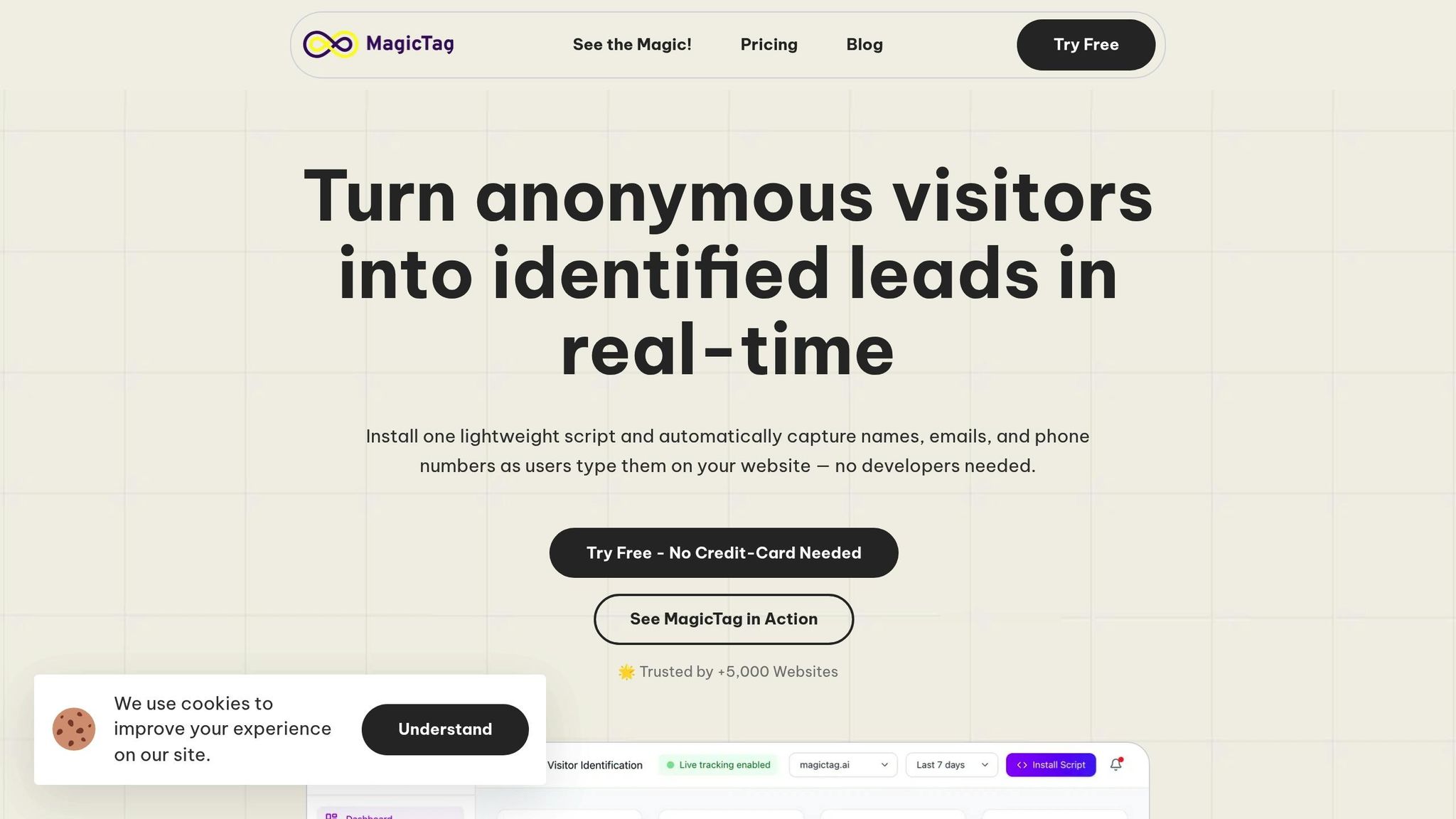
When it comes to lead response, speed is everything. Contacting a lead within five minutes increases the likelihood of qualification by 21 times compared to waiting 30 minutes. Companies that engage leads within an hour are nearly seven times more likely to qualify them.
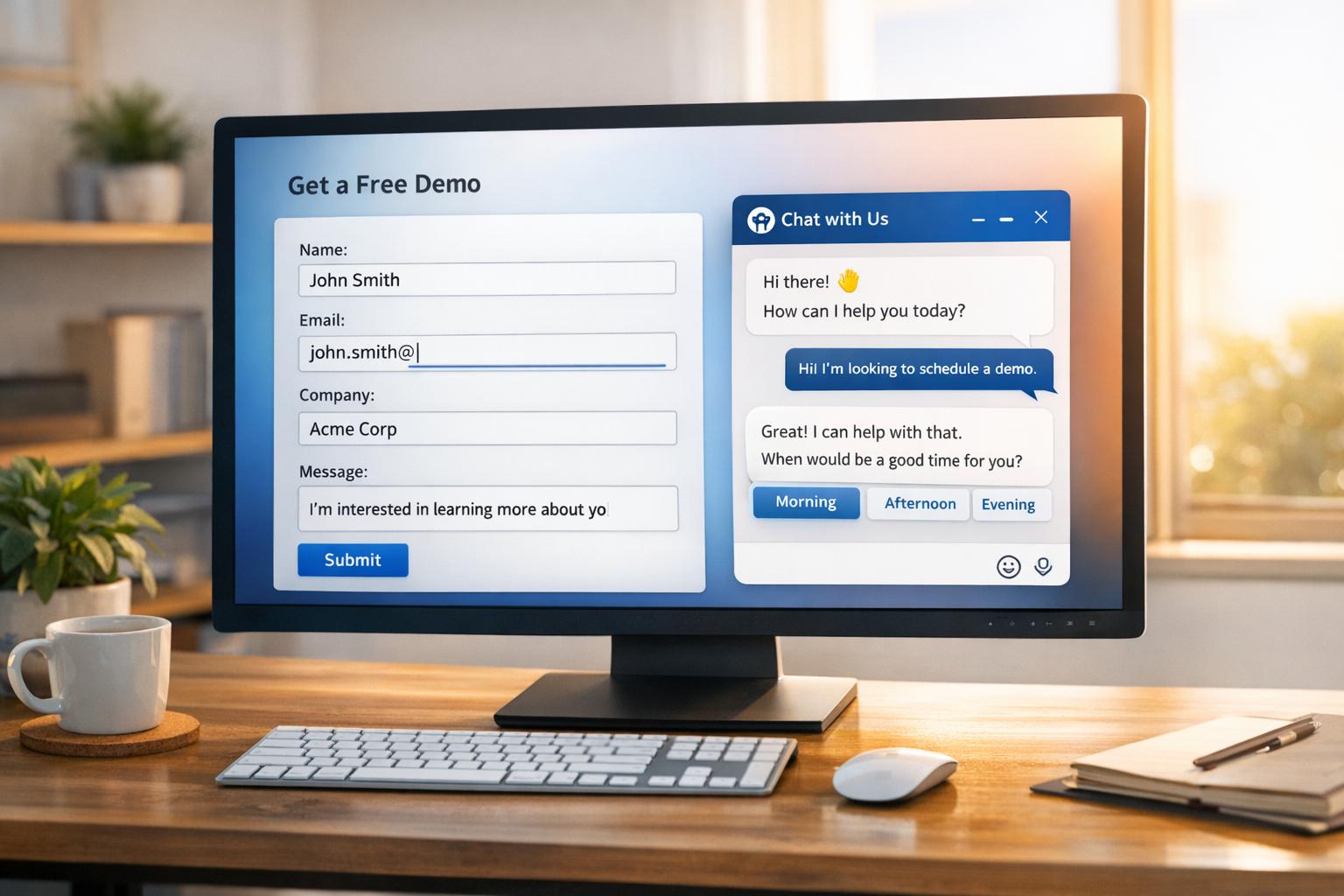
MagicTag takes real-time data capture to the next level. It collects user details - like name, email, and phone number - as they type into form fields, even if they don’t hit "submit." This means you can detect intent spikes instantly. For example, if someone starts filling out a demo request but abandons it midway, MagicTag still captures their information, enabling immediate follow-up.
MagicTag integrates with your CRM via webhook or API, pushing captured data instantly to trigger automated workflows. For instance, a "New Lead" webhook can launch a nurture sequence within seconds of a form interaction, ensuring you’re the first to respond. Companies using this tool can identify up to 12 times more leads compared to those without it, and it’s free for up to 1,000 identified users per month.
To make the most of this tool, set up behavioral triggers in your AI workflow. If a lead visits your pricing page or clicks a specific link, pause generic sequences and switch to a high-intent path with tailored content. Additionally, use AI-powered enrichment tools to validate emails and standardize company names at the point of capture, ensuring clean data flows through your system.
sbb-itb-77d5bc3
Build AI-Powered Nurture Workflows
AI-driven workflows can analyze real-time actions - like time spent on pricing pages or downloading content - to create dynamic, personalized interactions. Forget static email sequences; they’re a thing of the past. Businesses using automated lead nurturing report a 451% increase in qualified leads and a 53% boost in conversion rates from initial response to qualified lead compared to manual methods [28,12]. AI also ensures seamless communication across platforms like email, LinkedIn, SMS, and retargeting ads, delivering a consistent experience that adapts to the channel a lead prefers [7,28]. These workflows allow for tailored journeys that meet the unique needs of each lead segment.
Design Nurture Journeys for Different Segments
Once you've set up dynamic segmentation, the next step is to craft nurture journeys tailored to each segment. Break the buyer journey into three stages: Awareness (educational content), Consideration (comparison materials), and Decision (conversion triggers). Use modular content - like industry-specific case studies or personalized videos - to address each stage. AI can trigger transitions based on lead behavior.
For example, if a lead downloads a whitepaper in the Awareness stage, the system can follow up with a case study for Consideration. If they visit your pricing page, they’re immediately shifted to a high-intent Decision track, complete with a calendar booking link [7,28].
Set clear scoring thresholds to automate handoffs. For instance, when a lead hits 80+ points through high-intent actions, a sales rep is notified immediately. To prevent delays, add escalation triggers - if there’s no response within four hours, a manager gets alerted to ensure hot leads don’t go cold.
"The lead nurturing playbook that worked five years ago is dead. The static email sequences... are being obliterated by a new reality: prospects expect personalized, intelligent interactions at every touchpoint." - Mike Villar, Growth Rocket
With these tailored journeys in place, the next step is recovering lost leads and re-engaging them across multiple channels.
Recover Abandoned Leads with MagicTag
One common leak in the funnel happens when leads start filling out forms but don’t complete them. MagicTag’s real-time data capture solves this by recovering incomplete form submissions instantly. Automated workflows can kick in within an hour of abandonment, sending a short, personalized email with a direct link to the resource. For example: "I noticed you were checking out our pricing guide. Here’s a direct link - no form needed."
MagicTag integrates seamlessly with your CRM through webhooks, triggering follow-up workflows in seconds. You can set up behavioral triggers, too. If someone abandons a demo request form, they can automatically enter a three-day nurture sequence that includes a product video, a customer testimonial, and a calendar link. Since MagicTag captures up to 12x more leads than traditional forms, these recovery workflows dramatically expand your pool of engaged prospects.
Set Up Multichannel AI Sequences
Reaching leads across multiple channels speeds up conversions. In fact, prospects engaged on three or more channels convert 47% faster than those contacted through just one. When paired with dynamic segmentation, multichannel sequences ensure a unified, personalized approach.
Use conditional branching to guide your workflows. For instance, if a lead opens your email but doesn’t click, follow up the next day with a LinkedIn connection request referencing the email topic. If a lead clicks on a pricing link but doesn’t book a meeting, shift them to a high-intent path with a calendar prompt. For unresponsive leads who open emails, send simple, plain-text follow-ups to reignite the conversation. And always pause automation as soon as a prospect replies to avoid awkward or conflicting messages [28,14].
All these interactions should sync back to your CRM, creating a single source of truth. This ensures both sales and marketing teams have full visibility into every touchpoint.
Measure and Optimize Your AI Nurturing Campaigns
Once your AI-driven workflows are in motion, it’s time to focus on measuring and refining them. This step is critical for improving performance and ensuring your campaigns deliver results. Start by keeping an eye on key metrics. Look at engagement indicators like open rates, click-through rates, and reply rates. Dive deeper into funnel metrics such as MQL-to-SQL conversion rates, and don’t overlook financial measures like Cost Per Lead (CPL) and Return on Investment (ROI).
For a more advanced approach, track metrics like engagement progression scores, pipeline velocity, and intent advancement. These go beyond surface-level activity, helping you spot genuine buying signals rather than casual interest. In fact, sales teams using predictive intelligence are 2.8 times more effective at prioritizing the right leads.
Track Key Performance Metrics
To make your data actionable, create a dashboard that combines all your key metrics. This allows both marketing and sales teams to monitor performance in real time. Focus on quality over quantity - track how many leads from AI segments actually schedule meetings, not just those downloading content. Keep an eye on marketing-sourced pipeline revenue to highlight AI’s contribution to your bottom line. Also, add follow-up speed (SLA compliance) to your metrics. Quick responses can double your chances of securing a meeting.
Use score decay in your tracking system to prioritize recent interactions over older ones. Another useful addition is a "Reason for Disqualification" field in your CRM. This feedback loop helps refine AI scoring models by identifying which signals are most likely to lead to closed deals.
| Traditional Metric | AI-Enhanced Metric | Why It Matters |
|---|---|---|
| Cost per lead | Cost per qualified opportunity | Shifts focus to lead quality |
| Email open rates | Engagement progression scores | Tracks relationship development |
| Click-through rates | Intent advancement tracking | Measures buying signal strength |
| Conversion rates | Lifetime value acceleration | Focuses on long-term business growth |
With these metrics in place, continuously test and adjust your AI models to maintain and improve performance.
Test and Refine AI Models
To keep your AI models effective, regular testing is a must. Use A/B tests to experiment with AI-generated subject lines, content formats, calls-to-action, and send times. This helps you discover what resonates most with each audience segment. When done right, AI can boost lead generation by up to 50% through better targeting and personalization.
For less engaged segments, try bold messaging or new channels. Since these leads are less active, experimenting here carries less risk to your most valuable prospects. Don’t forget to regularly update your automated sequences. Rotate case studies, refresh subject lines, and tweak timing based on the data you collect.
Start with controlled tests on smaller segments before rolling out changes more broadly. This cautious, step-by-step approach allows you to monitor results and address any issues before they impact high-value leads. Considering that around 79% of leads fail to convert due to poor nurturing, continuous testing can make a significant difference.
Once your models are optimized, ensure human oversight is in place to maintain consistency and compliance.
Ensure Compliance and Human Review
While AI can handle a lot, human oversight is essential for keeping your campaigns aligned with your brand and compliant with regulations. Regular reviews ensure AI-generated content stays on-brand and adheres to laws like CAN-SPAM and TCPA, which govern email and SMS communications.
For high-value leads, combine AI with human interaction. Let AI manage routine tasks, but have sales reps step in when a lead shows strong buying signals. Use lead score thresholds to trigger these handoffs, ensuring high-value prospects receive personalized attention.
Maintain a record of AI interactions and set up safeguards to catch any off-brand or inappropriate messaging. AI assistants that provide cited responses can also help your team verify compliance with legal requirements. Lastly, ensure your CRM data is clean and standardized. Poor data quality can lead to flawed AI predictions and ineffective personalization. When done right, AI can drive a revenue increase of over 10%.
Conclusion
AI is reshaping lead nurturing by shifting from rigid, pre-set sequences to dynamic, real-time interactions. It empowers teams to deliver highly tailored experiences at scale, respond to inquiries within minutes, and focus their energy on prospects with genuine intent - rather than wasting time on cold leads. This shift is reflected in measurable improvements across the board.
For example, AI-driven systems can boost lead generation by as much as 50% through smarter targeting. Additionally, nurtured leads - those that receive consistent, personalized follow-up - can generate 20% more sales opportunities than those left unattended.
"The lead nurturing playbook that worked five years ago is dead. The static email sequences... are being obliterated by a new reality: prospects expect personalized, intelligent interactions at every touchpoint."
- Mike Villar, Founder of Growth Rocket
AI also excels at recovering missed opportunities. Tools like MagicTag can capture up to 12 times more leads compared to traditional form-based methods. By instantly identifying and re-engaging users who abandon forms or visit pricing pages, these tools pave the way for faster and more efficient lead conversion.
That said, striking the right balance is key. AI is invaluable for automating routine tasks like qualification, instant responses, and data analysis. However, human involvement remains crucial for handling complex negotiations and building meaningful relationships. To keep your AI tools performing at their best, prioritize clean data, regular testing, and compliance checks.
With 81% of sales teams already experimenting with or fully integrating AI tools by 2025, the real question is: how soon can your team embrace AI for lead nurturing? By leveraging clean data and dynamic segmentation, you can streamline the path from engagement to conversion - helping your team close more deals, faster.
FAQs
How does AI make lead nurturing more effective than traditional methods?
AI is reshaping the way businesses nurture leads by diving into real-time data to uncover each prospect's behavior, preferences, and intent. This paves the way for predictive lead scoring, which helps sales teams zero in on the leads most likely to convert instead of wasting time treating every lead equally.
It doesn't stop there. AI takes over repetitive tasks like sending follow-up emails, SMS messages, and managing social interactions. This frees up teams to focus on what really matters - having meaningful, high-impact conversations. Plus, AI can personalize content at scale, crafting messages tailored to each lead’s stage in the buyer’s journey and their preferred way of communicating. The result? Quicker responses, stronger engagement, and more qualified leads compared to traditional, manual efforts.
With real-time insights, predictive analytics, and automated personalization, AI ensures that every prospect gets the right message at just the right time - something manual methods often fall short of achieving.
What steps should I take to prepare data for AI-powered lead nurturing?
To get your data ready for AI-powered lead nurturing, start by collecting all essential lead details in real time. This includes information like names, email addresses, phone numbers, and interactions on your website. After gathering the data, clean and enrich it by filling in any missing details, such as company size or industry, and eliminate duplicate entries to keep everything accurate.
Make sure your data is standardized. For example, format dates consistently (e.g., December 19, 2025), use correct currency symbols (e.g., $12,500), and stick to uniform spelling conventions like "optimize." Segment your leads based on their behaviors and demographics - things like recent activity or engagement scores - so the AI can tailor messages to fit each group.
Once your data is prepared, sync it with your CRM or marketing platform using tools like MagicTag for smooth automation. Keep an eye on your data regularly, verify its accuracy, and tweak your AI models as needed to adapt to new trends. Following these steps will help your AI create effective, personalized lead nurturing campaigns.
How does MagicTag help recover leads from abandoned forms?
MagicTag helps businesses gather user details - like name, email, and phone number - in real-time as users fill out form fields, even if they abandon the form before submitting it. This feature allows businesses to save leads that might otherwise slip away.
It integrates effortlessly with CRMs through webhooks or APIs, ensuring that the collected leads can be utilized for remarketing, follow-ups, or nurturing campaigns. MagicTag is easy to set up, works with any website, and adheres to GDPR and LGPD regulations, making it a reliable solution for improving lead recovery and driving higher conversions.