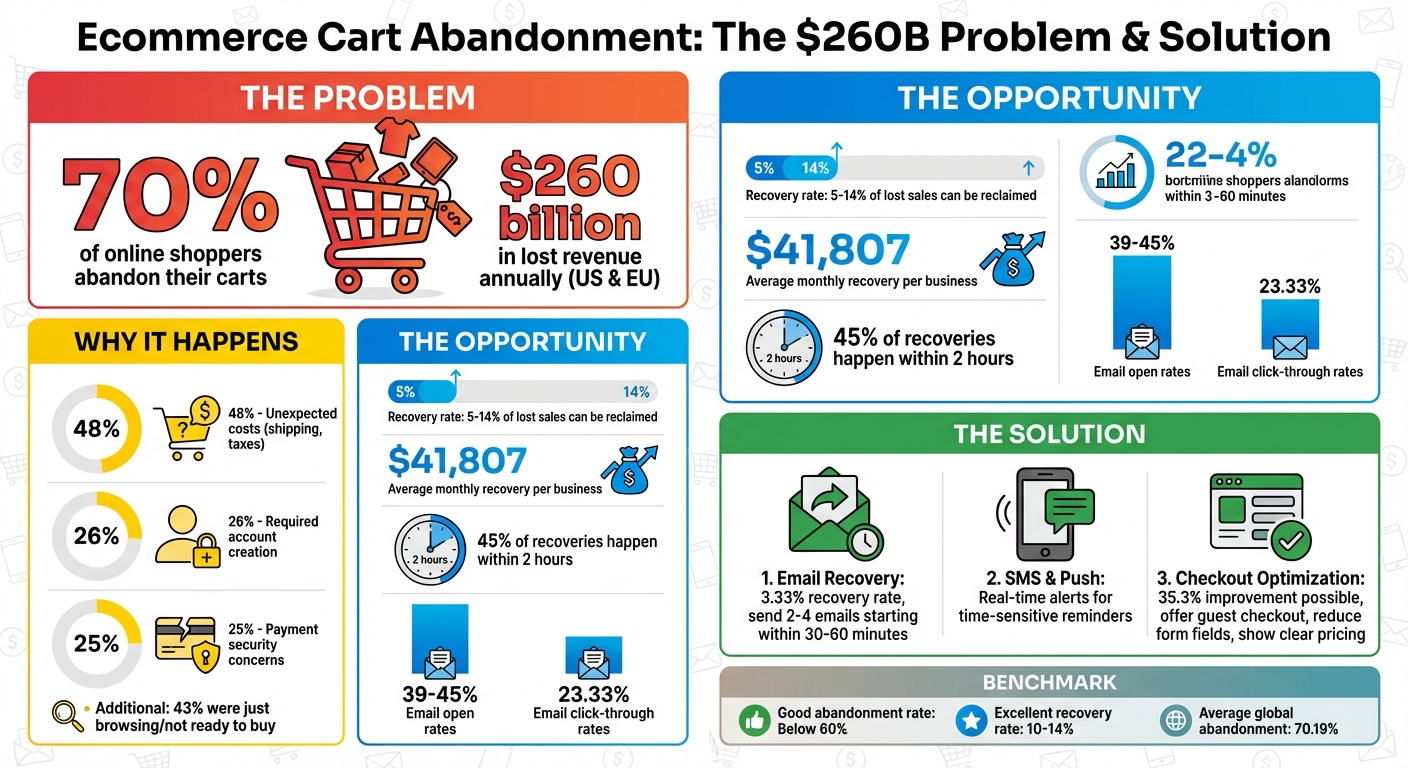
70% of online shoppers abandon their carts before completing a purchase, leading to $260 billion in lost revenue annually across the US and EU. Cart recovery helps businesses recapture these missed sales by targeting customers who leave without checking out. Here's what you need to know:
- Why it happens: Shoppers abandon carts due to unexpected costs, account creation requirements, or lack of purchase intent.
- Why it matters: Recovery campaigns can reclaim 5–14% of lost revenue, with businesses recovering an average of $41,807 per month.
- How to fix it: Use email, SMS, and push notifications to follow up quickly (45% of recoveries happen within 2 hours). Simplify checkout by reducing form fields, offering guest checkout, and displaying clear pricing.
Tools like MagicTag help by gathering customer data in real-time, enabling automated follow-ups and boosting recovery rates. By addressing abandonment causes and refining recovery strategies, businesses can increase conversions and recover lost sales effectively.
Ecommerce Cart Abandonment Statistics and Recovery Strategies 2025
The 8-Figure Cart Abandon Email Flow That Recovers 300% More Lost Sales (Klaviyo Email Marketing)
Why Shoppers Abandon Their Carts
Figuring out why customers leave their carts behind without completing a purchase is the first step toward tackling lost sales. The reasons range from unexpected costs to simply browsing without serious buying intent. Each of these reasons offers a chance to improve your checkout process and reclaim potential revenue. Let’s break down the main causes, how to track them, and the types of shoppers who abandon their carts.
Common Reasons for Cart Abandonment
On average, about 70% of online shopping carts are abandoned. In 2025, 43% of US online shoppers left their carts because they were "just browsing" or "not ready to buy". If we exclude this group of casual browsers, unexpected costs - like shipping fees, taxes, or other surcharges - stand out as the top reason people abandon their carts.
How to Measure Cart Abandonment
Measuring your cart abandonment rate is simple. Use this formula:
(Number of completed purchases ÷ Number of shopping carts created) × 100
This gives you the purchase completion rate. Subtract that percentage from 100, and you’ll have your abandonment rate. For instance, if 1,000 carts were created last month but only 280 led to purchases, your completion rate is 28%, meaning a 72% abandonment rate.
If your abandonment rate is below 60%, you’re doing better than most competitors. Regularly track this metric through your analytics tools to spot patterns and evaluate the results of any checkout improvements.
Categories of Abandonment Causes
Cart abandonment generally falls into two main categories:
- Shoppers without firm buying intent: These customers often use their carts as a wishlist, adding items without any immediate plans to purchase.
- Shoppers deterred by extra costs: Unexpected fees, taxes, or shipping costs at checkout can quickly drive these customers away.
Understanding these groups allows you to craft targeted strategies to recover lost sales and improve the shopping experience.
Cart Recovery Strategies That Work
To tackle cart abandonment effectively, adopt a multi-channel recovery plan that combines email, SMS, and checkout page improvements. These tactics align seamlessly with broader efforts to re-engage potential customers and boost conversions.
Email Campaigns for Cart Recovery
Cart recovery emails can help reclaim about 3.33% of lost sales. The key is to send 2–4 well-timed and personalized emails that re-engage shoppers without overwhelming them.
Start with the first email within 30–60 minutes of abandonment. Personalize the content by including product details, browsing history, and even past purchases. Instead of a generic "You left something behind" message, showcase the abandoned items with product images, names, and prices in USD - making it easy for customers to see what they're missing.
Make sure your emails have a clear and visually prominent call-to-action (CTA) button. Place it above the fold and ensure it's mobile-friendly. Use action-driven phrases like "Return to Cart" or "Complete Your Order" to encourage immediate action. Address common reasons for cart abandonment directly. For instance, if unexpected costs are a concern, highlight perks like free shipping or transparent pricing. If security is a worry, emphasize your secure checkout process.
SMS and Push Notifications
Pair email campaigns with real-time mobile alerts for an extra layer of engagement. SMS and push notifications are perfect for delivering time-sensitive reminders. For example: "Hi Sarah, your $89.99 order is waiting! Complete checkout in 2 minutes to enjoy free shipping today." These concise, value-packed messages create urgency and keep your brand top of mind.
When combined with email efforts, SMS and push notifications can significantly improve cart recovery rates.
Checkout Page Improvements
A streamlined checkout process can recover up to 35.3% of lost sales. Start by offering guest checkout to eliminate unnecessary barriers. Simplify the process further by minimizing the number of form fields - only ask for information that's truly essential.
Be upfront about costs by displaying clear pricing in USD (e.g., $29.99) to avoid unpleasant surprises. Additionally, include a progress indicator to show customers how many steps remain. This small but effective feature reduces uncertainty and keeps shoppers moving toward completing their purchase.
sbb-itb-77d5bc3
Using MagicTag for Cart Recovery
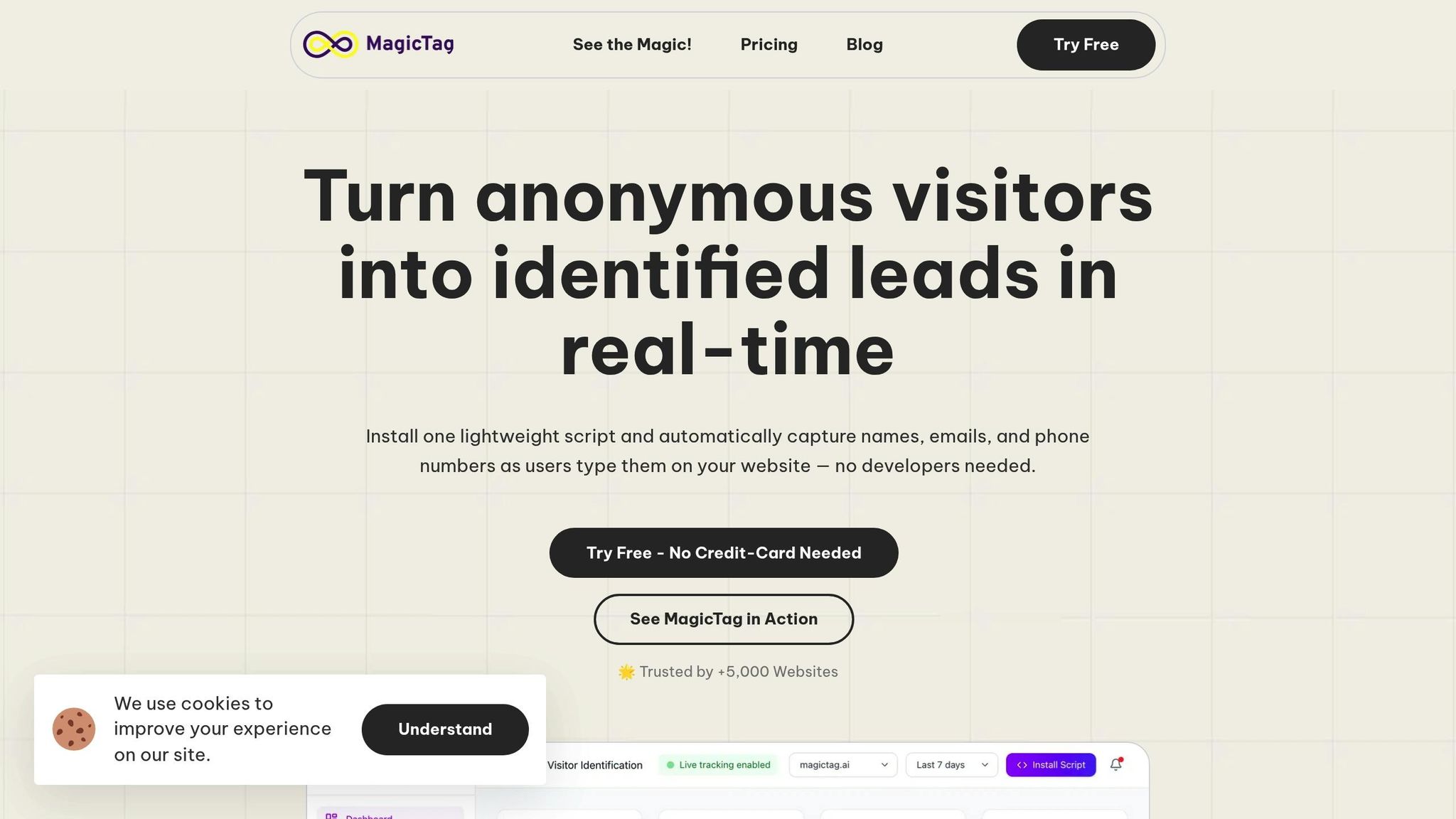
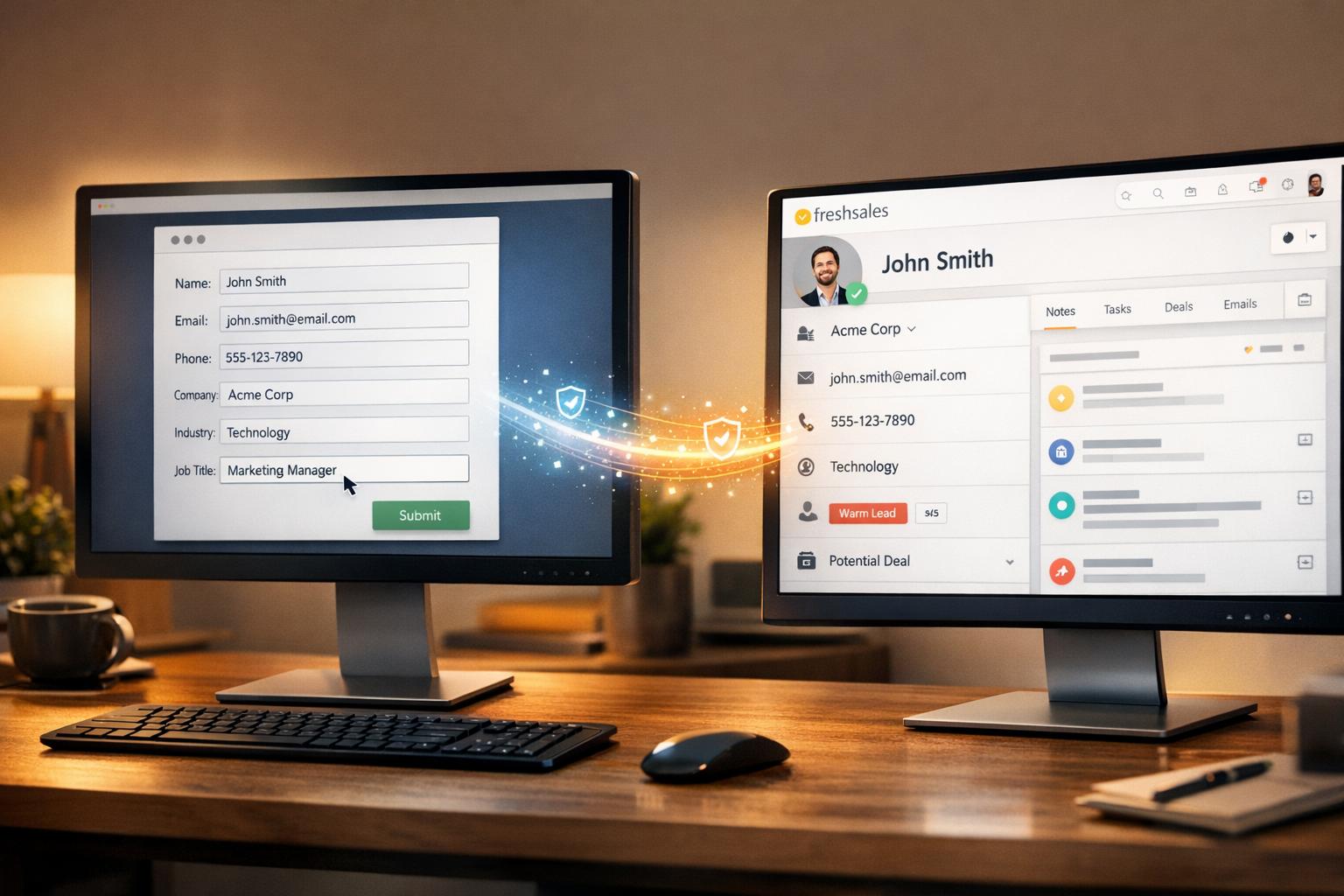
Take your email and SMS strategies to the next level by leveraging cutting-edge technology to capture leads in real time. MagicTag collects lead data as shoppers type into form fields, giving you the chance to follow up with personalized recovery campaigns before they even hit "submit."
How MagicTag Captures Lead Data in Real-Time
MagicTag keeps an eye on checkout form fields and records contact details as customers type - no need to wait for them to complete the form. This proactive approach can uncover up to 12x more leads compared to methods that only gather data after submission.
Setting Up Automated Recovery with MagicTag
MagicTag integrates directly with your CRM or marketing platform using webhooks and APIs. Once connected, it automatically sends captured lead data into your system, kicking off recovery campaigns without any manual effort. You can create multichannel campaigns that combine email, SMS, and push notifications, all triggered the moment a cart is abandoned. Plus, installation is lightweight and doesn’t require a developer, making it easy to enhance your recovery efforts.
MagicTag Features for Ecommerce
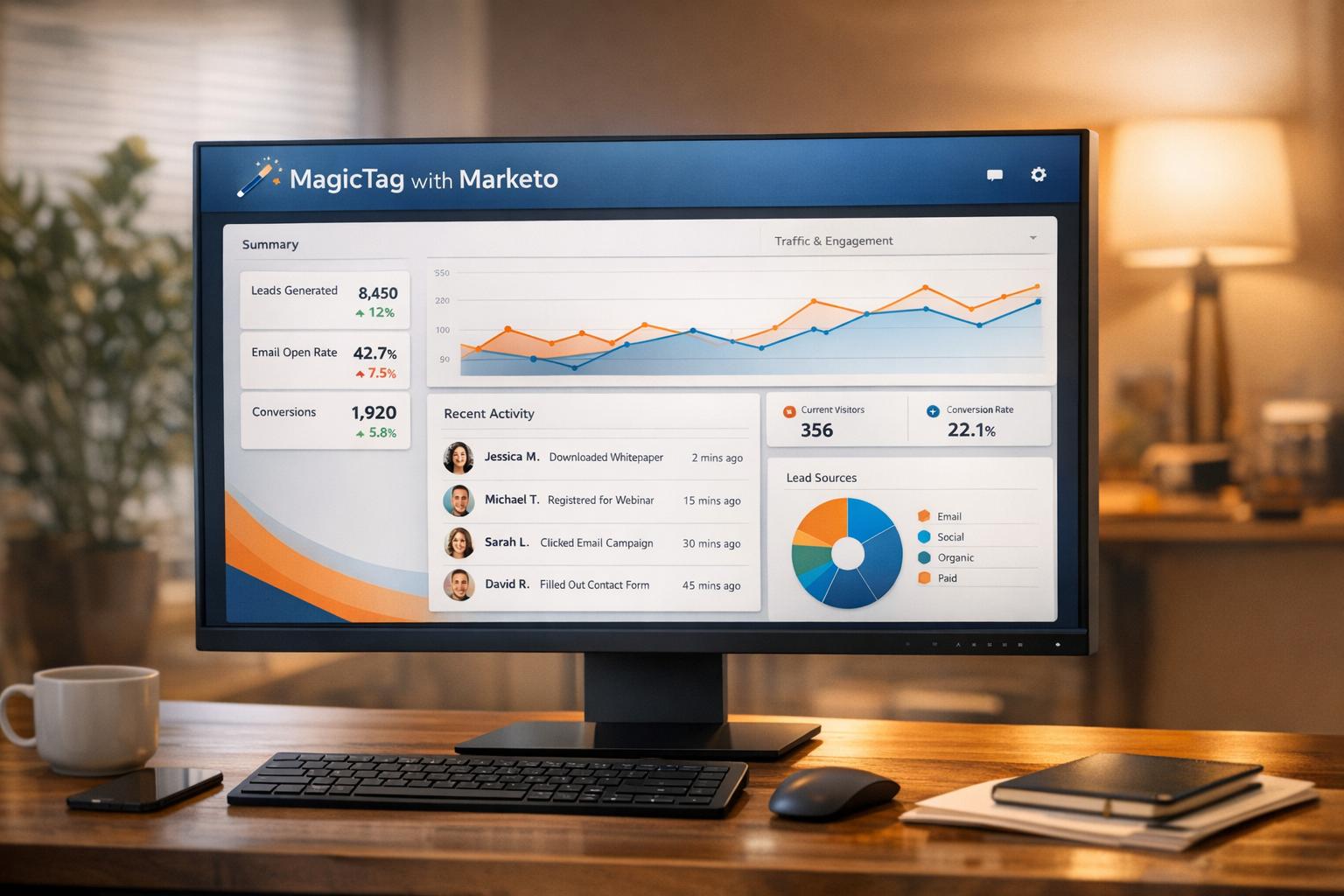
MagicTag includes a real-time dashboard to track abandoned carts as they happen, giving you instant insights. It works seamlessly with your existing marketing tools and ensures all data handling complies with GDPR and LGPD regulations, so you can stay on top of privacy requirements. With pricing starting at $0 for up to 1,000 identified users per month, you can experiment with cart recovery strategies without any upfront cost.
Measuring and Improving Cart Recovery Results
When it comes to cart recovery, the goal is simple: reclaim as many abandoned carts as possible. A good recovery rate typically falls between 5% and 10%, with top-tier performers reaching 10% to 14%. Beyond just the percentages, tracking the recovered sales revenue gives a clearer picture of how much your efforts are directly boosting your bottom line.
It’s also important to track how each recovery channel performs. For example, abandoned cart emails often see open rates between 39% and 45% and average click-through rates of around 23.33%. Don’t stop at email, though - monitor SMS and push notifications separately to figure out which channel delivers the best results. Once you’ve got the data, focus on the metrics that matter most.
Key Metrics to Track
Start with the big picture: your overall cart abandonment rate. Use this formula:
(Abandoned Carts ÷ Created Carts) × 100%. On average, the global cart abandonment rate hovers around 70.19%. Timing is critical, too - 45% of recoveries happen within the first two hours.
Another useful metric is the average order value (AOV) of recovered carts compared to regular purchases. This can tell you whether you’re bringing back high-value customers or just smaller transactions. Tools like Google Analytics 4 can help here by creating funnel explorations to pinpoint where shoppers are dropping off during checkout.
Testing and Refining Your Approach
Testing is key to improving your cart recovery strategy. Use A/B testing to experiment with different discount offers, email timing, subject lines, and messaging. Personalization can make a huge difference - personalized emails see 29% higher open rates and drive transactions 6× more effectively. Incorporate customer names, product images, and their recent browsing history to make your messages feel more tailored. Then, refine your approach based on what works best.
Using MagicTag Analytics to Optimize Performance
For even deeper insights, you can integrate your metrics with MagicTag Analytics. This tool helps you fine-tune your recovery strategy by focusing on multi-channel performance.
MagicTag’s real-time dashboard is a game-changer. It lets you see abandoned carts as they happen, giving you instant visibility into potential checkout issues. If you notice patterns like frequent drop-offs at a specific step, you can address them right away.
What’s more, MagicTag connects with your CRM via webhook, offering a complete view of each customer’s journey. You’ll know which recovery messages were opened, when customers engaged, and whether they responded better to email or SMS. With this data, you can segment your audience and create recovery flows that align with their actual behavior. This level of insight ensures you’re not just recovering carts - you’re doing it smarter.
Conclusion
Cart abandonment represents a $260 billion challenge for businesses in the US and EU combined. When shoppers abandon their carts, companies lose out on significant potential revenue. The good news? These aren't just casual browsers - they're people who already showed interest in buying, making them much easier to convert than brand-new visitors.
Why do shoppers abandon carts? 48% leave because of unexpected costs, 26% because they're required to create an account, and 25% due to concerns about payment security. Addressing these pain points by simplifying the checkout process, being upfront about costs, and using a multi-channel recovery strategy - like email, SMS, and push notifications - can help reclaim a large portion of lost sales. In fact, companies that optimize their checkout experience see an average 35.26% increase in conversion rates.
Timing is everything. 45% of cart recoveries happen within the first two hours after abandonment. That’s why tools like MagicTag are game-changers. By capturing customer data in real time, MagicTag enables instant follow-ups through automated recovery flows and CRM integration. This kind of seamless automation strengthens your ability to turn interested shoppers into paying customers.
To succeed, you need to monitor abandonment trends, test recovery messages and incentives, and use real-time insights to refine your approach. MagicTag’s real-time dashboard and analytics make it easy to spot where customers drop off and adjust your strategy on the fly.
Recovering abandoned carts isn’t just about boosting revenue - it’s about creating a system that consistently converts high-intent shoppers. Start with the basics, layer in automation, and let data guide your improvements. This approach doesn’t just recover lost sales; it lays the groundwork for sustainable ecommerce growth.
FAQs
What are the best ways to recover abandoned shopping carts in ecommerce?
Recovering abandoned carts takes a mix of smart strategies and the right timing. Start by sending follow-up messages quickly, ideally within 1–2 hours after the cart is abandoned, to stay fresh in the customer’s mind. Make these messages personalized, mentioning the exact items left behind to create a more engaging and relevant experience.
Use multiple channels like email and SMS to connect with customers where they’re most likely to respond. Adding incentives, such as discounts, free shipping, or time-sensitive offers, can encourage them to return and finish their purchase. You can also use exit-intent pop-ups or messages that emphasize urgency to grab their attention before they leave your site for good.
How does MagicTag help recover abandoned shopping carts?
MagicTag tackles abandoned shopping carts head-on by sending automated, personalized messages through channels like email, SMS, and real-time notifications. These messages are strategically timed to reach customers shortly after they leave their cart, giving them that extra nudge to finish their purchase.
What makes MagicTag stand out? Features like custom product recommendations and smooth, hassle-free communication. By addressing customer doubts with tailored offers and reminders, it helps remove obstacles at checkout. The result? Businesses can recover lost sales and see a noticeable boost in conversions.
Why do shoppers abandon their online carts?
Shoppers often leave their carts behind for a variety of reasons, many of which boil down to convenience and trust. One major culprit? Unexpected costs. Extra charges like high shipping fees, taxes, or hidden fees can quickly turn a potential purchase into a no-go. Similarly, a complicated checkout process - especially one that forces users to create an account - can frustrate shoppers enough to abandon their carts altogether.
Trust also plays a big role. Security concerns often arise when websites lack reassuring elements like reviews or security badges. Add to that limited payment options or unexpected delivery delays, and it’s easy to see why shoppers might hesitate. Even technical hiccups, like website errors, can disrupt the buying process and lead to lost sales.