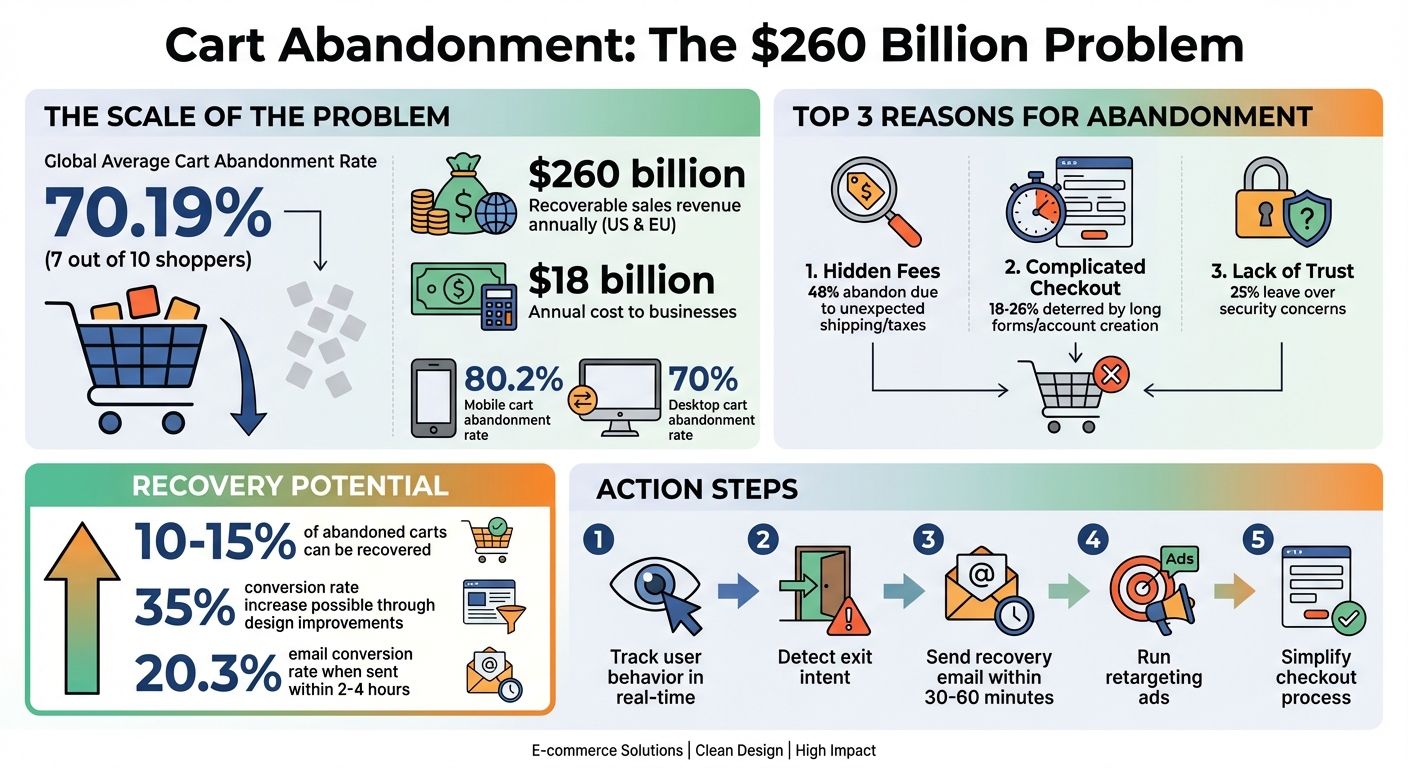
Cart abandonment is a major problem for e-commerce businesses, with 70.19% of online shopping carts left behind as of 2025. This means 7 out of 10 shoppers who intend to buy never complete their purchase, costing businesses $18 billion annually and leaving $260 billion in potential revenue recoverable in the US and EU alone. Understanding why cart abandonment happens and tracking user behavior before checkout are key to reducing these losses.
Key Reasons for Cart Abandonment:
- Hidden Fees: 48% of shoppers leave due to unexpected shipping, taxes, or fees.
- Complicated Checkout: Long forms and account creation deter 18–26% of users.
- Lack of Trust: 25% abandon carts over security concerns or unfamiliar payment options.
How to Track and Recover Lost Sales:
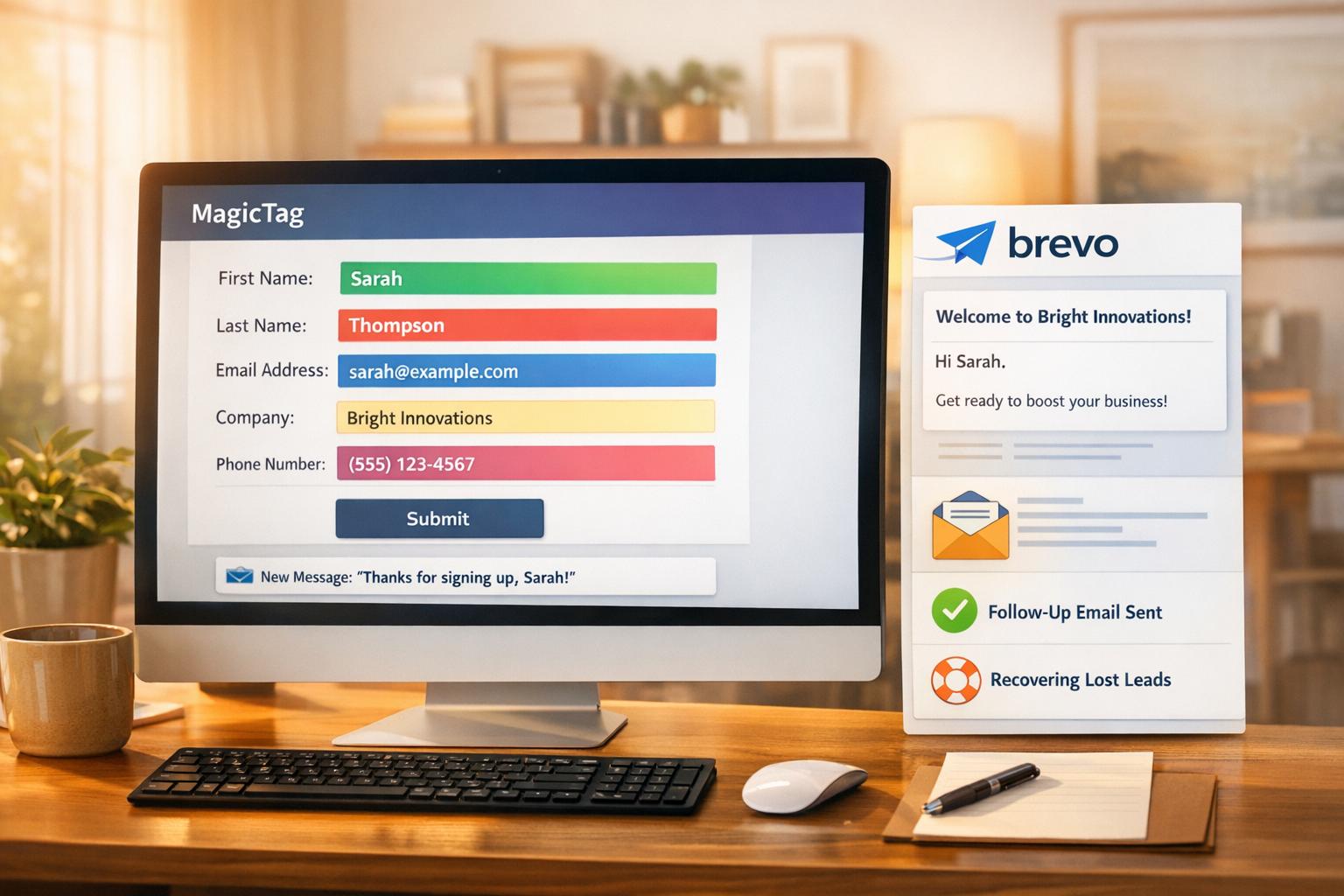
- Real-Time Tracking: Tools like MagicTag collect user data (e.g., email, name) before they leave.
- Exit-Intent Detection: Identify when shoppers are about to leave and use pop-ups or discounts to retain them.
- Follow-Up Campaigns: Send recovery emails within 30–60 minutes or run retargeting ads to bring shoppers back.
By addressing hidden costs, simplifying checkout, and building trust, businesses can recover 10–15% of abandoned carts and improve conversion rates by up to 35% through better design.
Cart Abandonment Statistics and Recovery Strategies for E-commerce 2025
8 Shopping Cart Abandonment Strategies To Improve Your Ecommerce Conversion Rate
sbb-itb-77d5bc3
Why Customers Abandon Their Carts
Grasping the reasons behind cart abandonment is essential for reclaiming lost sales. Most of the time, the culprits fall into three main categories: unexpected costs, a frustrating checkout process, and a lack of trust.
Hidden Fees and Surprise Costs
Sticker shock is the top reason shoppers abandon their carts. Nearly half (48%) of customers leave because shipping, taxes, or fees are too high. Another 17% to 21% quit mid-purchase because they can’t figure out the total cost upfront.
The issue isn’t just the extra charges - it’s the timing. When hidden fees pop up at the last minute, it feels like a bait-and-switch, frustrating customers who were already invested in the purchase.
"Nothing turns shoppers off more than seeing unanticipated fees tacked on at checkout."
– BigCommerce
The "Amazon effect" has also reshaped customer expectations. Today, 66% of American shoppers expect free shipping on all online orders, and 80% anticipate free shipping once they hit a certain spending threshold. Big players like Target, Walmart, and Best Buy offer free two-day shipping, making it the standard many customers now demand.
Complicated Checkout Processes
A clunky checkout process drives away 18–22% of online shoppers. On average, checkouts have 5.1 steps and require filling out 11.3 form fields - every extra step increases the likelihood of abandonment. Even worse, forcing customers to create an account before buying deters 24–26% of them.
Mobile shopping, in particular, struggles here. With an 80.2% cart abandonment rate on mobile devices, poor optimization is a major factor. Small buttons, difficult navigation, and tedious form entry make completing a purchase feel like a chore.
Lack of Trust
Trust is a cornerstone of online shopping. A quarter of U.S. shoppers abandon their carts because they don't feel secure sharing their credit card information, and 18% hesitate to enter payment details on sites they don’t trust. This trust gap is especially challenging for smaller or newer businesses without a well-known reputation.
First impressions matter: 75% of consumers judge a company’s credibility based on its website design. Missing security badges, outdated layouts, or the absence of customer reviews can send potential buyers running. Similarly, if familiar payment options like PayPal, Visa, or Apple Pay aren’t prominently displayed, customers may question the site’s legitimacy.
Technical hiccups add to the problem. Website errors and crashes are a dealbreaker for 17% of shoppers. Combine that with unclear or hard-to-find return policies, and suddenly, the risk of buying outweighs the desire for the product.
| Trust Indicator | Purpose | Impact on Abandonment |
|---|---|---|
| Security Badges | Reassures users about data encryption and security compliance | Reduces exits due to security concerns (18–25%) |
| Customer Reviews | Offers social proof and builds product credibility | Helps smaller businesses gain trust |
| Familiar Payment Logos | Signals a secure, reliable payment process | Lowers abandonment caused by unfamiliar options |
| Clear Return Policy | Reduces perceived risk for the shopper | Boosts confidence, especially for higher-priced items |
All these factors - hidden fees, complex checkouts, and trust issues - combine to create a poor user experience, leading to significant revenue losses.
The Cost of Lost Carts
Cart abandonment is a massive drain on potential revenue. Globally, the average cart abandonment rate is 70.19%, and for e-commerce businesses in the U.S. and EU, this translates to a staggering $260 billion in recoverable sales revenue every year, caused by poorly designed checkout processes alone.
"Shopping cart abandonment is big, bad, and pervasive... That means for every ten e-commerce customers that put an item in their cart, seven leave the site without completing their purchase."
– Neil Patel, Co-Founder of NP Digital
When a cart is abandoned, it’s not just about losing that single transaction - it’s about wasted marketing dollars and missed opportunities for long-term customer relationships. Investments in SEO, paid ads, and content marketing lead to zero return if the shopper doesn’t complete their purchase. Even more concerning, 40% of shoppers who abandon their cart due to friction will turn to a competitor to finalize their purchase. This isn’t just a loss of one sale; it’s a handoff of potential recurring revenue, upsells, and customer loyalty to a rival.
The challenge is even greater for mobile shoppers, who abandon carts at an alarming 80.2% rate, compared to 70% on desktop. This highlights how poor mobile optimization can drain revenue even further.
But there’s hope. According to Christian Holst, Research Director at Baymard Institute:
"The average large-sized e-commerce site can gain a 35.26% increase in conversion rate [solely through design improvements]."
– Christian Holst, Research Director at Baymard Institute
Recognizing the scale of these losses makes it clear that advanced tracking and behavioral triggers are essential to recapture lost leads and boost conversions. This often requires predicting lead intent to prioritize high-value shoppers before they leave.
How to Track Cart Abandonment Before Customers Leave
Recovering lost sales starts with understanding customer behavior before they leave your site. While traditional analytics focus on what happens after the fact, modern tracking tools allow you to see where shoppers hesitate, encounter issues, or show signs of leaving. Here are some actionable ways to gather insights and improve your checkout process before customers abandon their carts.
Monitor Form Field Input in Real Time
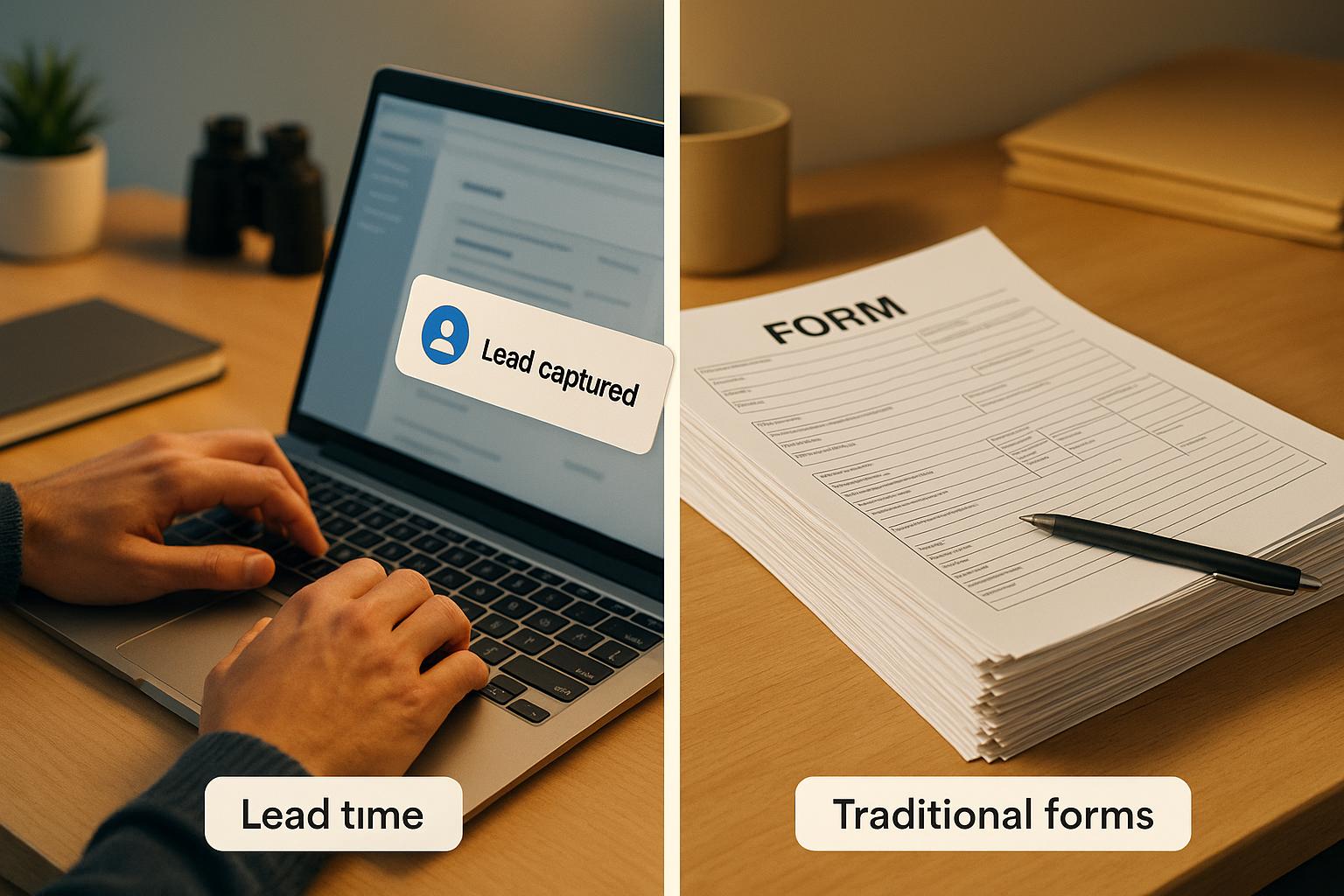
Most businesses only capture data after a form is submitted. But with over 70% of online carts abandoned, waiting until submission means losing valuable leads. Real-time tracking lets you collect information as users type, even if they abandon the page moments later.
By analyzing how users interact with each field, you can identify why visitors abandon forms. For example, if many shoppers quit after entering their email but stop at the phone number field, it could signal friction. On average, checkout forms include 23.48 elements, but studies show they can work with as few as 12. Streamlining these forms based on user behavior can significantly reduce drop-offs.
Identify Exit Intent Before It Happens
In addition to tracking form interactions, exit-intent detection can help you catch customers on the verge of leaving. This technology monitors behaviors like rapid mouse movements toward the close button or navigation bar. Some advanced tools even pick up on users highlighting product names, which often indicates they’re comparing prices on other sites.
When exit intent is detected, you can deploy interventions like discount offers, pop-ups, or browser tab notifications to grab their attention and encourage them to stay.
Leverage MagicTag for Real-Time Data Capture
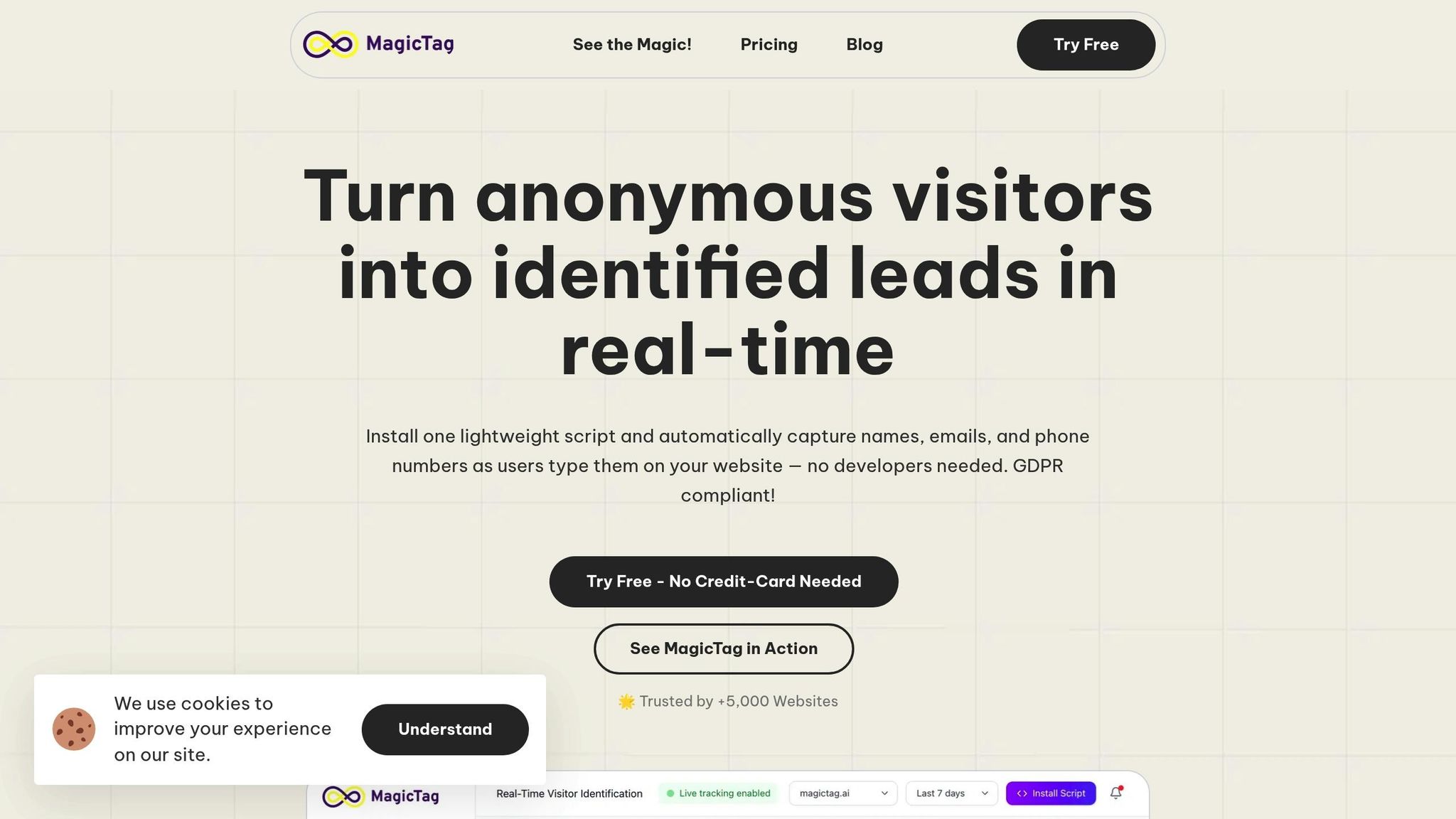
MagicTag is a tool designed to collect essential information - such as names, emails, and phone numbers - in real time, even if users don’t hit “submit.” It integrates easily with CRMs through webhooks and APIs, automatically storing this data for quick follow-up. This is one of several effective methods to recover abandoned form leads before they are lost forever.
Beyond capturing leads, MagicTag provides insights into where users drop off during checkout. Its centralized dashboard highlights specific friction points, helping you refine your checkout process. Best of all, MagicTag works on any website and doesn’t require a developer to set up. With a free plan that supports up to 1,000 identified users per month, it’s an accessible option for businesses looking to recover lost leads quickly and effectively.
How to Recover Lost Sales with Captured Data
Once you've gathered contact and behavior data, you can use it to turn abandoned carts into completed purchases. Well-executed follow-ups can recover 10–15% of lost orders, with some strategies pushing that number to 20%.
Re-Engage Lost Leads Through Email and Ads
Your follow-up campaigns are your best chance to re-engage potential customers. Emails sent within 2–4 hours after cart abandonment have a conversion rate of 20.3%, compared to 12.2% when sent later. To capitalize on this, send your first recovery email within 30–60 minutes to tap into the shopper's high purchase intent. A three-email sequence spread over 72 hours is generally the most effective approach - sending more can harm your sender reputation.
Personalization is key. Include the shopper's name, images of the products they left behind, and a direct link to their cart. If shipping costs caused them to abandon their cart, consider offering free shipping. For those who stopped at account creation, remind them that they can check out as a guest.
Leverage the data you’ve collected to run dynamic retargeting ads on platforms like Facebook. Research shows that combining retargeting emails with ads doubles the likelihood of conversion compared to using just one method.
A great example of this is Etix, an online ticketing company. By using pre-submit tracking, they identified anonymous users who filled out forms but didn’t complete them. In just one year, they tracked 1.1 million abandoned transactions from potential customers who hadn’t even registered.
Identify and Fix Checkout Problems
While re-engagement focuses on individual shoppers, analyzing abandonment data can help you improve your checkout process as a whole. Common issues like unexpected shipping fees or overly complicated forms are frequent culprits. For instance, if 48% of shoppers abandon their carts due to high shipping costs, it’s a clear sign to display total costs earlier or experiment with free shipping thresholds.
Segment your abandoners based on their behavior. Group them by cart value, whether they’re first-time or returning visitors, the products they selected, and where they dropped off. This segmentation can reveal whether abandonment stems from trust issues (leaving at the payment stage), complexity (quitting mid-form), or cost concerns (leaving after seeing shipping fees).
Simplify your checkout process by removing unnecessary form fields and adding inline validation to reduce friction. Christian Holst, Research Director at Baymard Institute, emphasizes the potential here:
"The average e-commerce site can improve its conversion rate by 35% solely through design improvements to the checkout process".
Tools like MagicTag’s dashboard can pinpoint exactly where users encounter friction, making it easier to identify patterns and test solutions. Use A/B testing to experiment with streamlined forms, trust badge placements, and shipping offers - then scale the strategies that work best.
Conclusion
Cart abandonment highlights weak points in your sales funnel. With over 70% of online shopping carts left behind, pinpointing the main causes - like surprise shipping costs, overly complex forms, or a lack of trust signals - can guide you toward practical solutions.
Using tools like MagicTag, you can gather real-time user data before they leave, allowing for personalized follow-ups through email campaigns or dynamic ads. This approach has been shown to recover about 10.7% of abandoned orders. Beyond re-engagement, these insights can help you make meaningful improvements to your checkout process.
To break it down: tracking user behavior and acting quickly are key to improving your sales funnel. By analyzing why customers abandon their carts, you can address common issues like hidden fees or a confusing checkout experience that might be driving them away.
Christian Holst from Baymard Institute sums it up perfectly:
"The average e-commerce site can improve its conversion rate by 35% solely through design improvements to the checkout process".
FAQs
How can I prevent cart abandonment caused by unexpected fees?
When it comes to cutting down cart abandonment caused by hidden fees, clarity is key. Make sure customers can see all costs - like taxes, shipping, and any extra charges - right from the start, whether on the product page or in their cart. This level of transparency reassures shoppers and prevents unpleasant surprises during checkout.
You might also want to think about offering free shipping for orders over a specific amount or introducing flat-rate shipping. These approaches not only simplify the buying process but also encourage shoppers to follow through with their purchase.
How can I make the checkout process easier for customers?
To make the checkout process smoother and reduce cart abandonment, focus on creating a quick, straightforward, and user-friendly experience. Start by cutting down the number of form fields to just the essentials. Features like autocomplete can also save customers time and effort. Offering a guest checkout option is another smart move - it lets people complete their purchase without the hassle of setting up an account, which often reduces friction.
Be upfront about all costs. Clearly display product prices, taxes, shipping fees, and any other charges early on. A single-page checkout or a process with clear progress indicators can also make a big difference by showing customers exactly how close they are to finishing their purchase.
Don't overlook the technical side. Make sure your checkout page is fast, works seamlessly on mobile devices, and includes familiar payment options like credit/debit cards, Apple Pay, and Google Pay. Finally, build trust by adding visible security badges and clear return policies. These small touches reassure customers and make them more likely to complete their purchase.
How can real-time tracking help prevent cart abandonment?
Real-time tracking lets you see exactly what a shopper is doing on your site in the moment, giving you the chance to step in before they leave. By capturing partial form details and tracking their actions, tools like MagicTag can send automated follow-ups - via email, SMS, or push notifications - just minutes after a cart is abandoned. This swift response can make a big difference, significantly improving the odds of bringing shoppers back to finish their purchase.
It also helps you identify where things go wrong in the checkout process. Maybe unexpected costs are turning people away, or perhaps the sign-up process feels too complicated. With this data, you can send personalized messages that tackle these specific issues and remind customers of the items they left behind. These timely, targeted messages can improve cart recovery rates by 5–14%, adding thousands of dollars to your monthly revenue. Acting while the shopper’s intent is still fresh transforms what could have been a lost sale into a completed one.